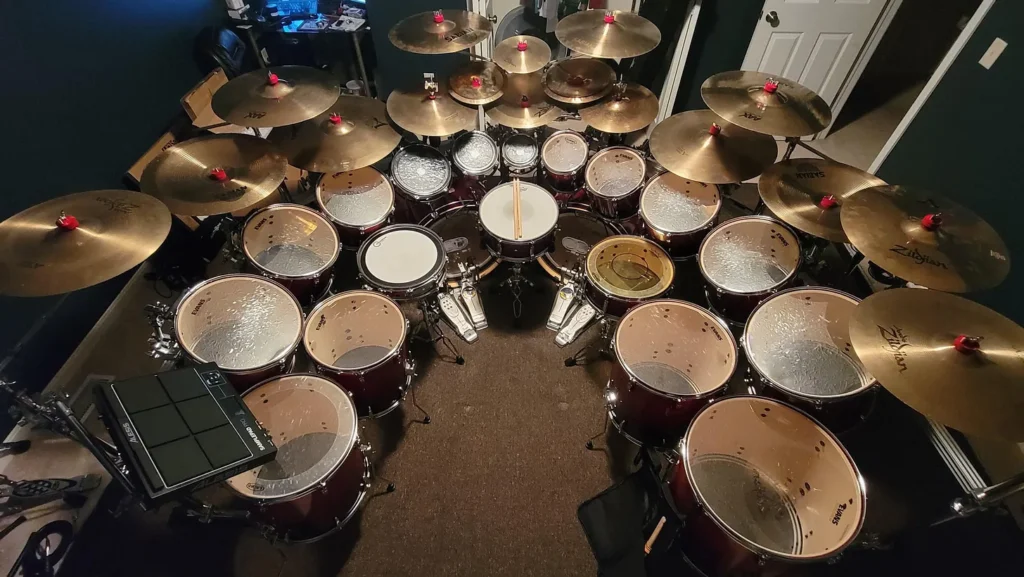
Like many others, I was once enticed by the monster that was Mike Mangini’s drum kit. It’s a playground for an inner child to explore. Who wouldn’t want a combined 45 drums and cymbals to spend three hours on every night? But to the beginner who is looking up “drum kit” on Amazon for the first time, knowing where a standard kit ends and his kit begins is a nightmare.
The truth is, there are fewer essentials for a drum set than the web would have you think. Most companies package together a 5-piece and that’s generally enough to learn any modern music. But this article isn’t just for the grab-and-go musician. It’s for the beginner enthusiast, who wants to one day be able to build their own kits from scratch, combining the different sounds and emulating the tones of their favorites. So by the end of this, you should know the core of the drum set and the ways that other parts are added to flavor the grooves played on it.
The Core (Kick, Snare, and Hat)
You can learn a remarkable amount by playing with just a kick drum, a snare drum, and a hi-hat. In this solo from Nate Smith, there’s probably three combined notes played outside of these instruments. Yet, the groove is so deep and so steady that you could get lost in it for days.
The reason these three dominate the core of drumming goes back to the early 1900s where retired military drums (specifically cymbals, marching snares, and marching basses) were put together to be played with ragtime and blues music. They started as three different instrumentalists and gradually merged into a single person playing the role of all three. One of my favorite demonstrations of this was [The Blues March]() by Art Blakey & The Jazz Messengers, where Art Blakey was playing the role of all three instrumentalists over a blues version of a Military March.
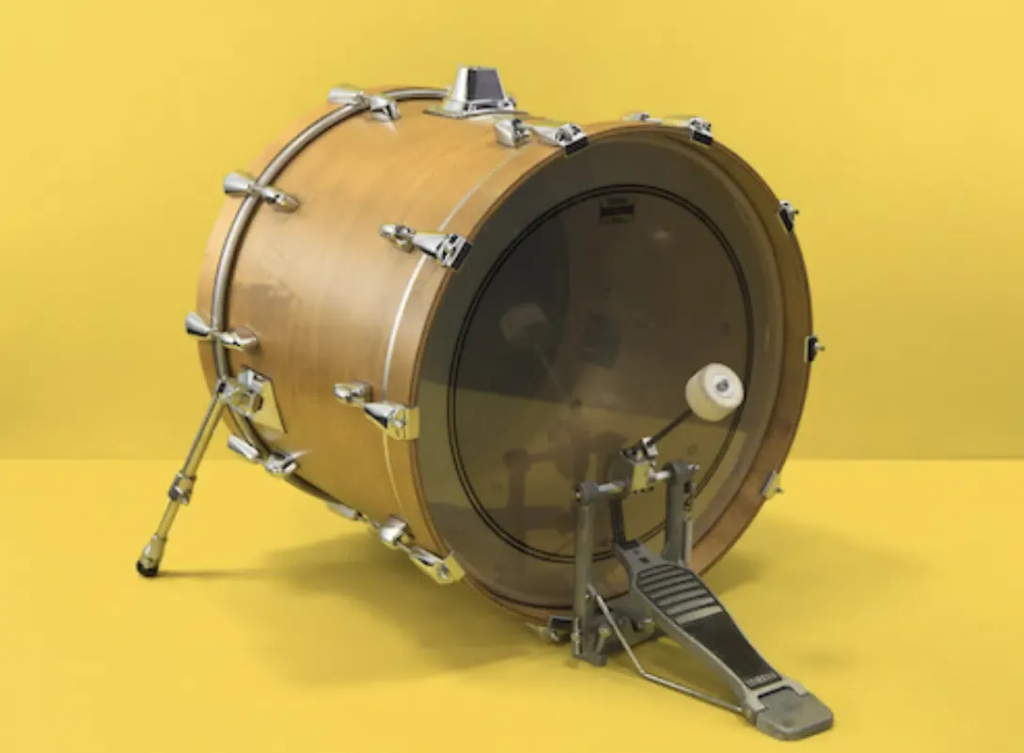
The kick drum is the center of the kit. It’s essential to the kit because it is often the *pulse* of music. It’s original use was to be felt and rarely heard, almost as an emphasis on the bass guitar, upright bass, or tuba, but its since evolved to be used for moments of dense impact in genres like EDM or Metal. Its tone is much more guttural than the snare or the hi-hat, so it tends to shape the movement of music much more foundational than them. A typical size for this is going to be 20-22”.
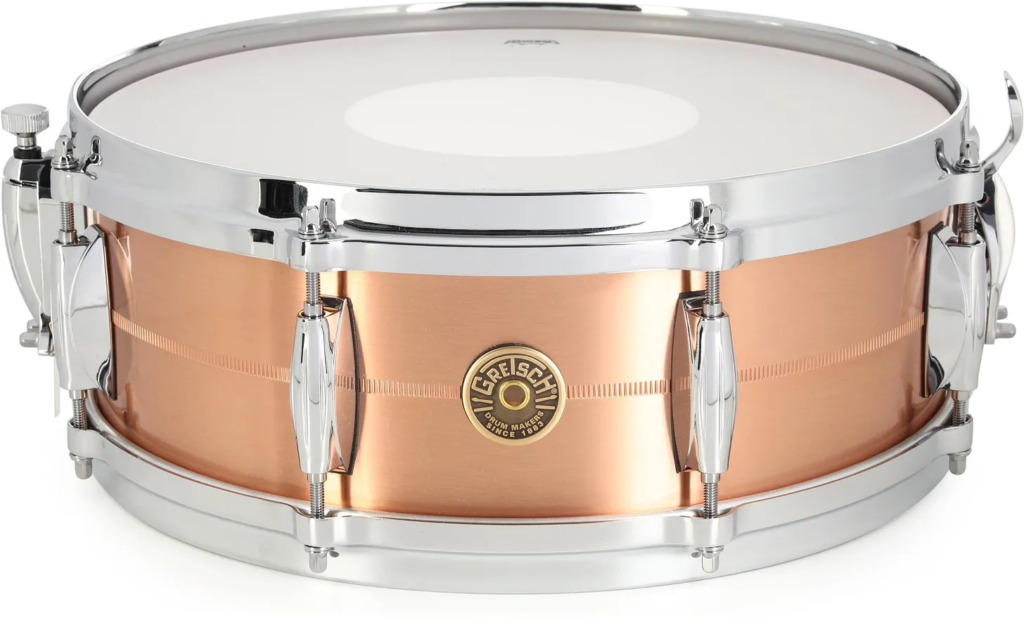
The snare drum is the shape of the groove. Whereas the bass tends to shape the foundation, the snare tends to dance on top of this to shape the groove itself. When the bass is playing consistently, it fades into the backgrounds of people’s minds, and the snare is left to create variation. A typical size for this is going to be 14”.
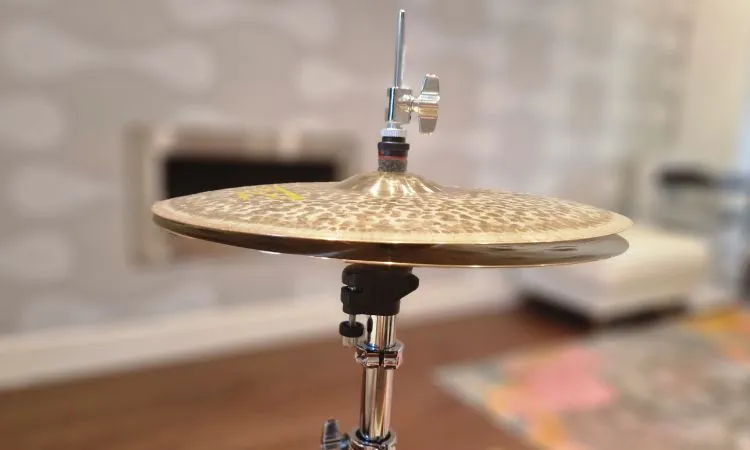
The hi-hat is the time keeper. It’s essential as a consistency to yourself and the musician’s you play with. Everything you play on the kick or the snare is in relation to a consistent flow of time agreed upon by the musicians around you (otherwise known as tempo), and the hi-hat is your most accurate representation of this inner sense of time. A typical size for this is going to be 14”.
It should be emphasized that none of these are 100% true under every circumstance. There are genres and grooves where the kick is the shape of the groove while the snare is the center, and other times where the hi-hat is the shape while the kick drum keeps time. But for most modern music, this is the most consistent way of thinking of them.
Toms
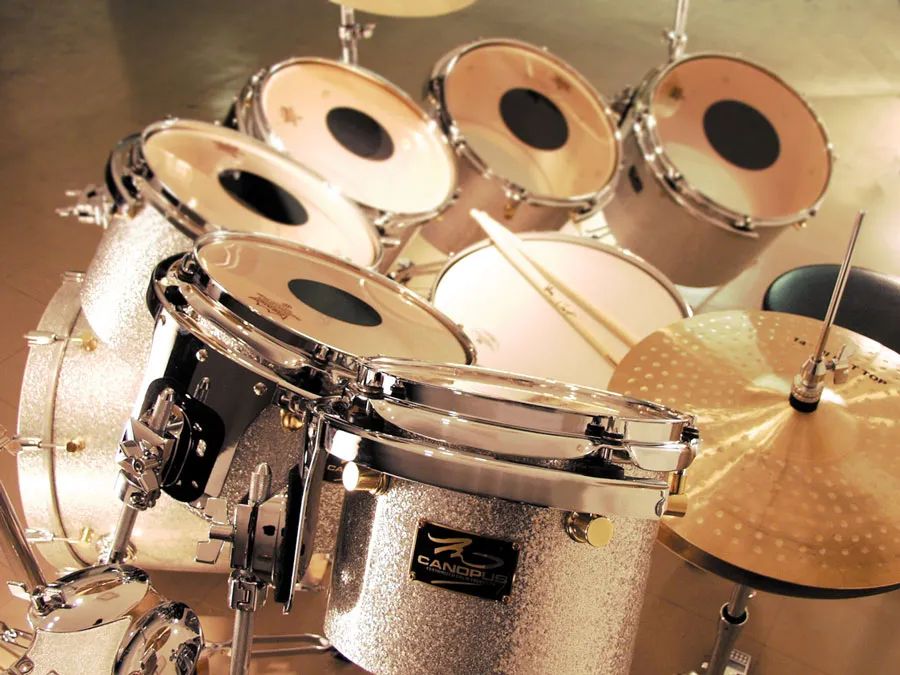
Toms are the *thud* and *doink* in music. They are the other drums used outside of the kick and snare. Because of the heightened tonality of them, they are often used in darker sections or as transitions. Although, they can be used in grooves from time to time as was typical of *Ringo Starr*. While there’s typically only 1-2 snares and kick drums in a kit, people will extend their kit indefinitely with toms of various sizes. The purpose of this is often to create a more melodic kit by increasing the number of tones it can produce, thereby creating more obvious options for ascending and descending the *scale* that the kit creates.
The main reason this is not an *essential* part of the kit is because it’s not 100% necessary to serve the purpose the kit has: to groove. It is so much fun playing as fast as you can up and around all of the different drums on a kit, but when it comes time to play with other people then the amount of toms you have hardly matters. That said, most kits start out with 2-3 toms, which is more than suitable for any case (ie 5=piece = 1 snare, 1 kick, and 3 toms), and is enough to have fun messing around with when you start.
Cymbals
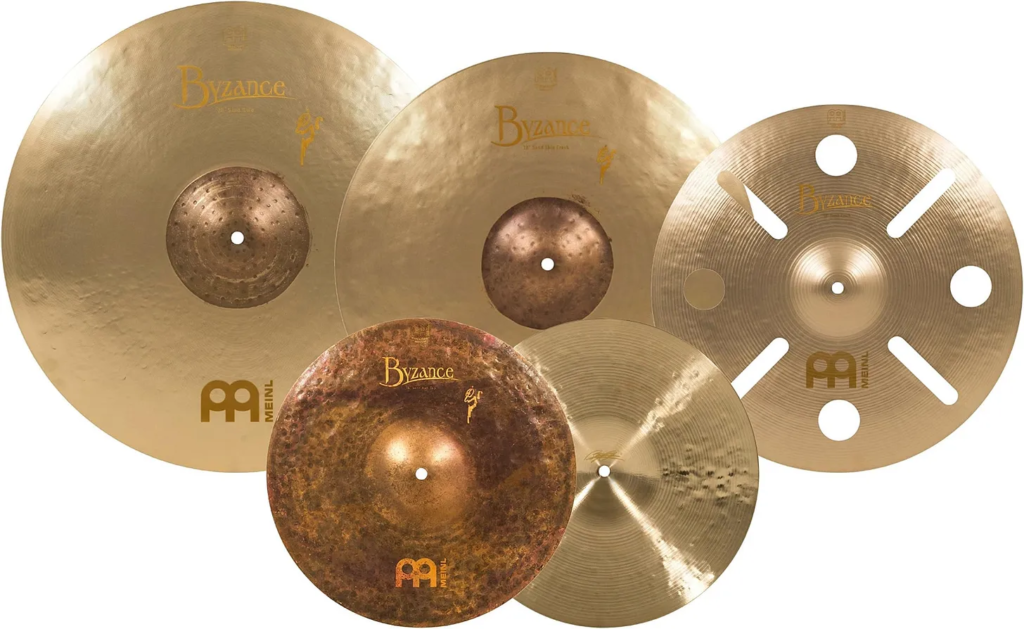
Cymbals are the *crash* and the *bang* in music. When you think loud, you think cymbals. They’re piercing and cutting up close, but wash out in the distance. Because of this, they pair well with the bass drum which provides a clear attack that gets sustained by the cymbal’s wash.
The hi-hat is the core cymbal you’ll use and need to get started with. After that, adding in a *ride cymbal* and *crash cymbal* are great next steps. The role stays about the same for each cymbal you add: i.e. they all are time keepers. But the hi-hat is the most crucial *because* it is the only one that engages your fourth limb.
As always, thank you for taking the time to ready through this. I’m always looking for ways I can be of more use to the drumming community, so if you have any questions or topics you want covered, I would love to help! Until then, happy drumming!